Share Martin Wagner's obituary with others.
Invite friends and family to read the obituary and add memories.
Stay updated
We'll notify you when service details or new memories are added.
You're now following this obituary
We'll email you when there are updates.
Select your format and elements to print
IN LOVING MEMORY OF Martin Wagner
Martin
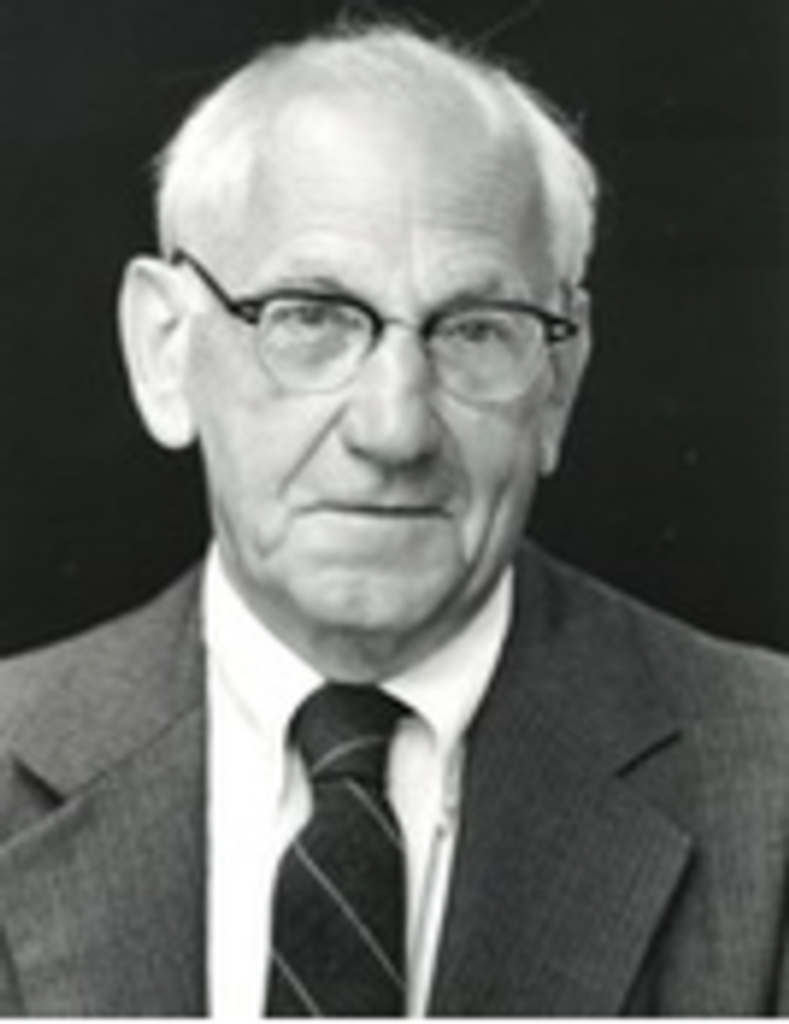
Wagner
Sep 11, 1911 — Jun 15, 2009
Martin Wagner's Obituary
6/15/09
Martin Wagner, former director of and professor emeritus at the Institute of Labor and Industrial Relations (ILIR), died at home in Urbana, IL on June 15th at the age of 97.
Professor Wagner came to the University of Illinois in 1958 as director of ILIR (now the School of Labor and Employment Relations), serving in that position until 1968. He continued to teach at the institute until his retirement in 1982. He remained active in the field and at the institute, going to his office nearly every working day into his early 90's. As director he helped shape the Institute, deepening its commitment to the highest quality in faculty scholarship and student learning, establishing the doctoral program, and increasing connections across the campus, throughout the state, and around the world. During his tenure there were a number of international symposia on all aspects of industrial relations. Along with Milton Derber and other co-authors from the Institute, he wrote about emerging developments in public sector collective bargaining and international industrial relations. He was a leader in the development of Illinois public policy on public sector collective bargaining.
Former students and colleagues remained in frequent contact with him over the years and his influence is still felt at the institute. A mark of his stature is the immediate and generous outpouring for various challenge grants he issued, as well as the decision of the school to establish a named professorship in his honor. While at the university he served on many campus-wide committees, and chaired the search committee that hired Stanley Ikenberry as president of the university. Ikenberry (president from 1979-95) said of Martin, "He was a frequent advisor, answering with great care and thoughtfulness all the questions I put to him. He contributed greatly to whatever success I enjoyed during those years."
Wagner was born in Newport, Kentucky, on September 11, 1911, to German immigrant parents. His father was a shoemaker (in the days when shoemakers actually made shoes) and his mother was a homemaker. He earned an AB in economics from the University of Michigan in 1933 and an MA in economics in 1935. Upon graduation he went to Oxford University as a Rhodes Scholar, earning a BA in politics and economics.
Wagner, nationally recognized as a labor arbitrator, helped resolve a broad array of labor-management disputes in the public and private sectors. He began his career in arbitration and mediation in 1937 as a field examiner for the National Labor Relations Board in Cincinnati. He moved up the ranks very quickly, becoming a regional director in San Francisco (1943-44) and Cincinnati (1944-47). In 1948 he became the founding executive director of the Louisville Labor-Management Committee, the nation's first area labor-management committee. He held that post from 1948-58, when he accepted the appointment at the University of Illinois. After retiring in 1982, he was asked by Illinois Governor James Thompson to chair the Illinois Educational Labor Relations Board for a term of five years. The board adjudicated and addressed a broad range of educational matters, including collective bargaining rights for graduate students at the University of Illinois.
Wagner was a leader in a broad range of professional organizations, including serving as vice president of the National Academy of Arbitrators from 1981-83 and as a member of the national executive board of the Industrial Relations Research Association (now the Labor and Employment Relations Association). His involvement continued until the very end of his life. He received many honors and awards, including membership in the Lincoln Academy and lifetime membership in the International Brotherhood of Electrical Workers. He received a Lifetime Achievement Award from the Labor and Employment Relations Association and, shortly before his death, was presented with a 50 year service award from the National Academy of Arbitrators.
Robben Flemming, former president of the University of Michigan, and the man he succeeded as director at the institute, said of Wagner, "Martin is one of the finest people I've ever known. He is highly regarded and respected in the whole labor-management relations field, whether as an arbitrator, a mediator, or in consulting work." The current dean of the School of Labor and Employment Relations at Illinois, Joel Cutcher-Gershenfeld also described the high esteem in which he was held, commenting "Martin Wagner is a towering figure in our field. He was present at or shortly after the founding of the leading professional associations in the field. He presided over the development and expansion of the Institute, providing the core "DNA" for what continues to be a vibrant culture of warmth, community, accomplishment, and impact in the field. Trusted by labor and management as a leading arbitrator of workplace disputes, valued by scholars as a thought leader in industrial relations, and beloved by all, Martin Wagner is a rare individual who has positively influenced countless lives and, in the process, changed the world."
Everyone who knew Wagner had to be aware of his zest for life - his great love for and devotion to many disparate things: the University of Illinois and the Institute, opera, good food and wine, Pentwater, Michigan, and, of course, his appreciation of and generosity toward family and friends. He met his wife Nelle Nordstrom Wagner in Ann Arbor where he was the instructor in an economics course she was taking. Also in that class was Gerald Ford (later President Ford), who was Nelle's dancing partner. But she preferred Martin, and they married in 1938.
Wagner was a fierce and loyal supporter of the institutions about which he cared. His association with the Rhodes Scholarship program spanned his years at Illinois. He served on the Great Lakes Rhodes Selection Committee and provided advice to many students both at Illinois and other colleges who sought the prestigious fellowships. In 2003 he and his daughter Martha attended the reunion of Rhodes Scholars in London and Oxford in celebration of the 100th anniversary of the creation of the program.
Some of the many things Wagner cared about deeply are reflected in the long list of generous charitable gifts he made throughout his lifetime to Krannert Center for the Performing Arts, the University of Illinois Library, the UI School of Music and his generous support of the Institute of Labor and Industrial Relations. His many gifts there helped create an endowment fund for the institute in support of graduate fellowships and guest lectureships, a challenge grant to establish an endowed professorship, and a gift to establish the Wagner Educational Center to honor his late wife, Nelle, and to recognize his years as director and professor at the institute. The institute has also begun a campaign to establish an endowed chair in his honor
He is survived by his son John, of Orlando, FL, his daughter Martha Wagner Weinberg, of Brookline, MA, and two grandchildren, David and Katy Weinberg. His wife preceded him in death in 1997. A special commemorative event at the School of Labor and Employment Relations and a memorial service are planned for the weekend of September 11th, 2009. In lieu of flowers, contributions may be made to The Parkland College Foundation Gloria Valenti Scholarship or The University of Illinois Foundation Allan E. Crandell, MD Award. Both awards will be used to support students who demonstrate extraordinary potential to provide compassionate healthcare.
Martin Wagner's Guestbook
Visits: 3
This site is protected by reCAPTCHA and the
Google Privacy Policy and Terms of Service apply.
Service map data © OpenStreetMap contributors