Share David Lazarus's obituary with others.
Invite friends and family to read the obituary and add memories.
Stay updated
We'll notify you when service details or new memories are added.
You're now following this obituary
We'll email you when there are updates.
Select your format and elements to print

IN LOVING MEMORY OF David Lazarus
David
Lazarus
Sep 8, 1921 — Sep 8, 2011
David Lazarus' Obituary
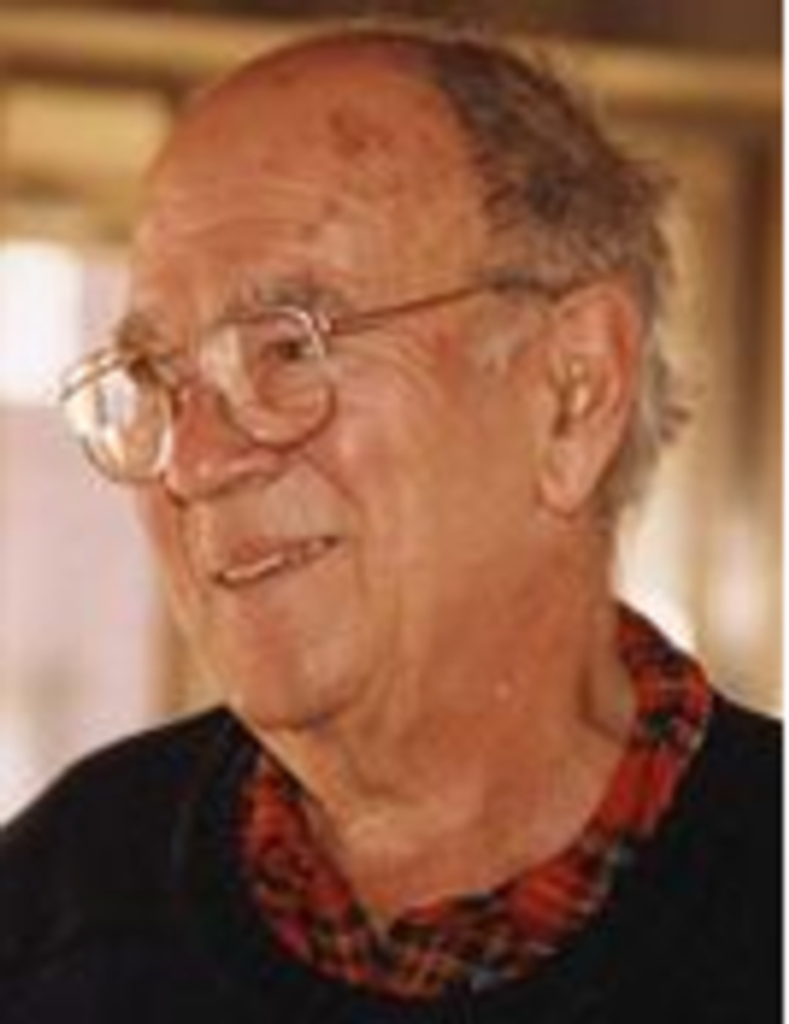
David Lazarus, Emeritus Professor of Physics of the University of Illinois and formerly Editor-in-Chief of the American Physical Society, passed away on Thursday, September 8, at his Urbana home where he lived with wife, Betty, for 50 years until her death in March 2009. He was a pioneering scholar in solid state physics known for his "great hands" in the laboratory, celebrated teacher who made physics accessible to nonscientists, and a strong proponent of basic scientific research and its potential to promote the public good.
Son of Barney and Lillian Lazarus, David Lazarus was born in Buffalo, New York, on September 8, 1921, where his mother's family owned an electric product manufacturing company, and he was one of 35 first cousins. His hero as a young boy was Thomas Edison, and he decided at age 14 that he wanted to be a physicist and began reading books by Albert Einstein and Leonard Infeld. He was admitted to the two colleges to which he applied -- the University of Chicago and the Massachusetts Institute of Technology -- and attended Chicago because the $300 tuition there was fifty percent lower.
Professor Lazarus obtained both his undergraduate and doctorate degrees in physics at the University of Chicago. He interrupted his graduate studies to work during World War II at Harvard University's Radio Research Laboratory. There, as part of the Special Reserve of the War Manpower Commission, he developed devices to jam radar, which were successfully used on every airplane and ship during the D-Day Invasion. The jammers prevented the German armed forces from knowing where the allied troops were landing, causing their military leaders to think the troops were landing simultaneously all over Western Europe.
Immediately after receiving his PhD in physics in 1949, Professor Lazarus joined the Physics Department at the University of Illinois, headed by Wheeler Loomis. Loomis in short order brought to Urbana from all over the country a group of outstanding young physicists and their families, creating an extraordinary community of colleagues who both quickly came to be recognized internationally as one of the truly great physics departments and, with their families, developed close, enduring friendships that have lasted for more than 50 years.
Professor Lazarus gained international renown for his path-breaking research on diffusion in solids, particularly metals, and was known for his great skill in the laboratory. His work took him all over the globe, including a significant trip to the Soviet Union in 1964, during the height of the Cold War. In 1968, he was awarded a Guggenheim Fellowship to teach and conduct research at the University of Paris in France.
At the University of Illinois, he was also widely celebrated as a teacher of undergraduates, where students repeatedly singled him out as one of the best teachers in the University, describing how "Lazarus raised physics from the dead." He believed strongly that everyone -- not just scientists -- should understand physics and its significance to their daily lives, once describing to a grandson his pride in having taught thousands of students "about the beauty of physics." He developed and taught two widely popular physics classes for nonscientists, a "Physics for Poets" course that delved into theoretical physics and a "Practical Physics - How Things Work" course that revealed the workings of physics in modern technology used by ordinary people. Along with his colleague Bob Hulsizer, he published a high school physics text, "The World of Physics." He nonetheless always made clear that his most important professional accomplishment besides his research was his work with 44 graduate students who received their PhDs under his supervision at Illinois.
But his greatest love was his family, especially his wife of almost 65 years, Betty. They met when he was a 17-year old freshman at the University of Chicago and she was a 16-year old high school student at New Trier High School who later also attended Chicago, and he repeatedly marveled at his great luck in having married someone so beautiful and so much smarter than he was. In Urbana, they raised four children, Barbara, William, Mary Ann, and Richard. The Physics Department was the centerpiece of their community, but, thanks to Betty, the Lazarus household was frequented by musicians, sociologists, psychologists, writers, philosophers, filmmakers, mathematicians, and artists, young and old. For decades, their parties were famous for bringing together friends and families for great food and stimulating conversation. David also enjoyed painting, and as a student of Gertrude Quassler and Betty Johnston their Urbana home came to boast many of his water color and oil paintings. He and Betty shared a life-long love of music and the arts and they were strong supporters of the Krannert Center for the Performing Arts, which they attended regularly, in addition to their decades of road trips to the opera in Chicago with their close friends the Goldwassers and Axels.
From 1980-1991, Lazarus assumed a new professional challenge, serving as Editor-in-Chief of the American Physical Society, directing the Society's three peer-reviewed journals: Physical Review, Physical Review Letters, and Reviews of Modern Physics. He is credited with greatly enhancing the quality of the journals, restoring their financial viability, and successfully defending against lawsuits that sought to breach the confidentiality of the Society's decision-making process for publication decisions. Following victory in the federal courts, he proudly announced "Sweet are the rewards of victory," upon learning that the courts had also awarded recovery of court costs.
Outside of Urbana, his second home was Martha's Vineyard, where he and Betty spent summers with their children since 1959 and established yet another extraordinarily close community of friends. As he approached his 90th birthday, he made clear that he was content with his life, describing it to his children in his final days with the simple words: "What a pleasure." Precisely as he had hoped, he died peacefully, at his Urbana home with his family present, on his 90th birthday. And, as he had wished, he will join his wife Betty in burial at a family plot on Martha's Vineyard.
In addition to his wife Betty, he was preceded in death by his eldest daughter Barbara, who died in 2003. He is survived by his children, William, Mary Ann, and Richard, niece Amanda, sons-in-law Marvin Sirbu and Daniel Jay, daughters-in-law Suellen Lazarus and Jeannette Austin, dear friend Karen Frerichs, grandchildren Margaret and Benjamin Sirbu, Eben and Oliver Lazarus, David, Laura, and Michael Jay, and Samuel and Jesse Lazarus, great grandchildren Brooklyn Beth Campisi and Skylar Dugan, Amanda's husband Michael Siegel, and grand nieces Johanna and Rosalie Siegel.
There will be a memorial service in Urbana at the University of Illinois' Levis Faculty Center on November 13, 2011 at 11 a.m. and an opportunity for friends on Martha's Vineyard to celebrate his life next summer. Donations in his memory can be made to the Sinfonia da Camera, 909 W. Oregon, Urbana, IL 61801.
David Lazarus' Guestbook
Visits: 5
This site is protected by reCAPTCHA and the
Google Privacy Policy and Terms of Service apply.
Service map data © OpenStreetMap contributors